Mobility stations Berlin TXL

Introduction

Six months after the opening of BER Airport, Berlin-Tegel Airport was closed. A future-oriented location is being created on the site with two central projects: Berlin TXL – The Urban Tech Republic, a research and industrial park for urban technologies, and the Schumacher Quartier, a residential area with around 5,000 apartments.

In the future, around 800 companies with approximately 17,500 employees will operate in the Urban Tech Republic. In addition, Beuth University, with over 2,500 students, is moving into the former terminal building. The focus is on forward-looking topics such as sustainable mobility, energy efficiency, recycling, and digital infrastructure management. Berlin TXL – The Urban Tech Republic is a project that is currently unique in Europe, if not worldwide.

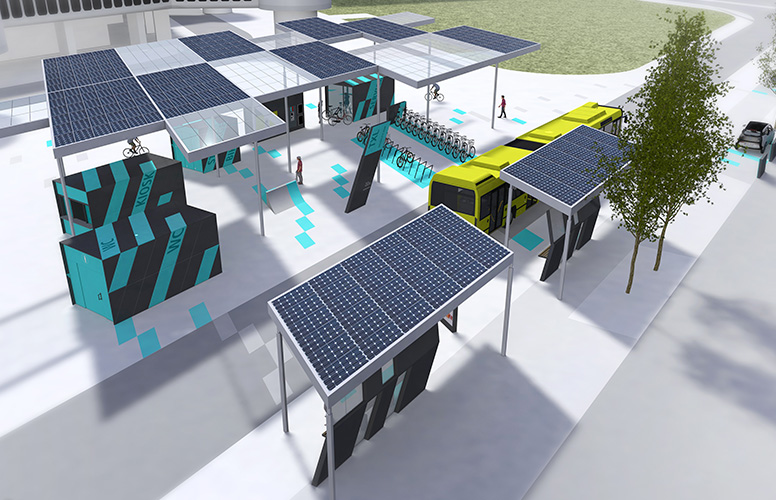
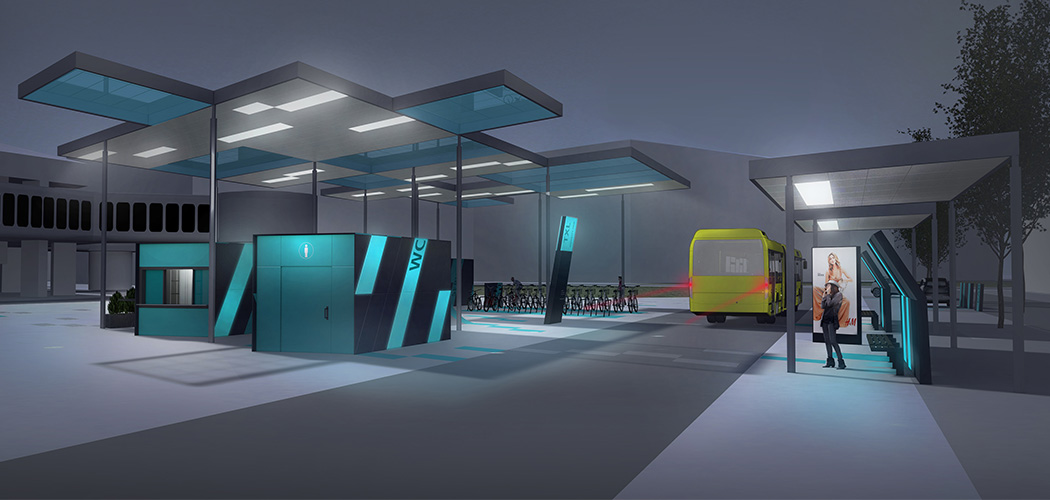
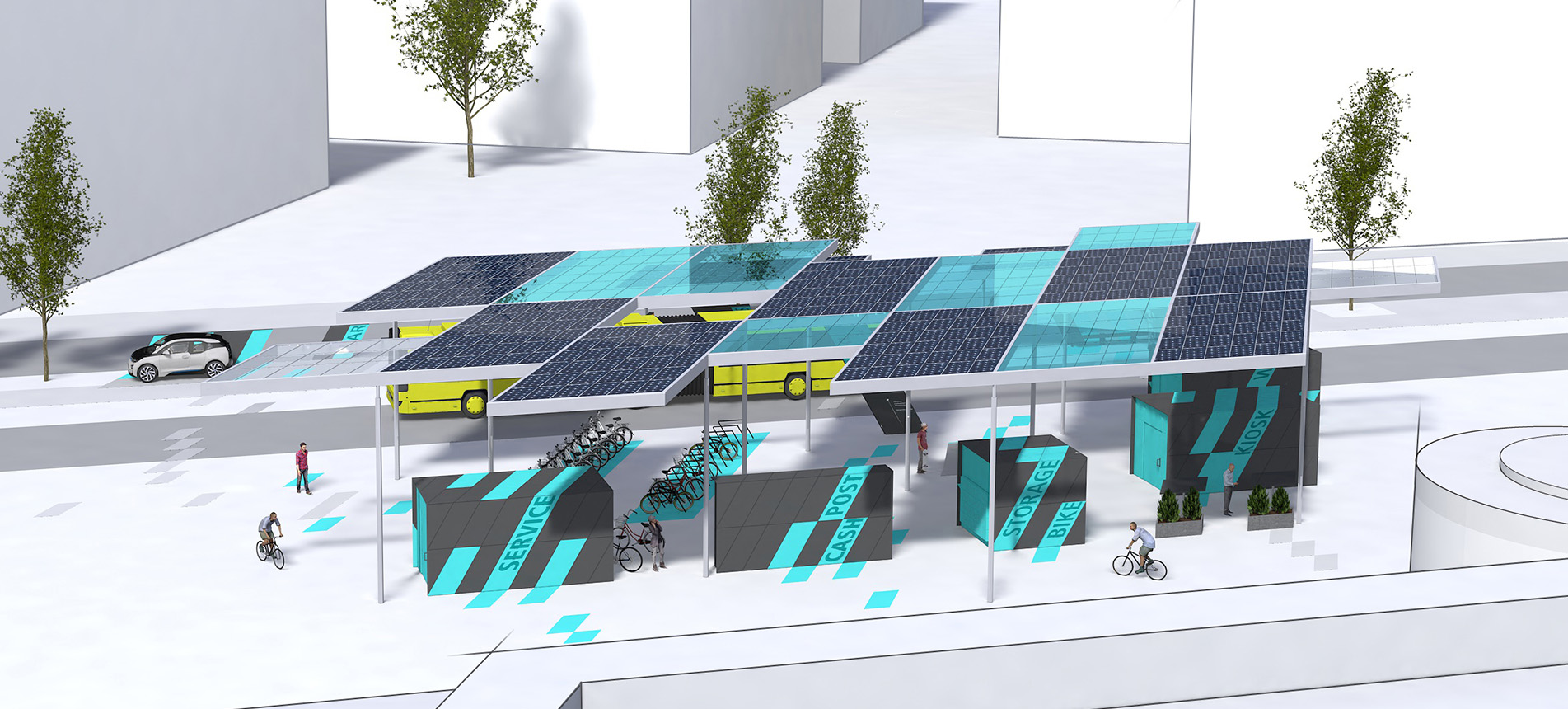
An efficient public transport connection is crucial for the success of the location. Mobility hubs are designed to enable smooth transfers between different modes of transport and serve as visible locations for urban mobility. They are modular in design and include public transport stops, bicycle parking spaces, car-sharing areas, charging stations, short-term parking spaces, taxi stands, and additional services such as kiosks and parcel stations.
Tender

The project was awarded through a negotiated procedure with competitive bidding. Our design concept convinced the jury in all evaluation criteria and was given the highest score.
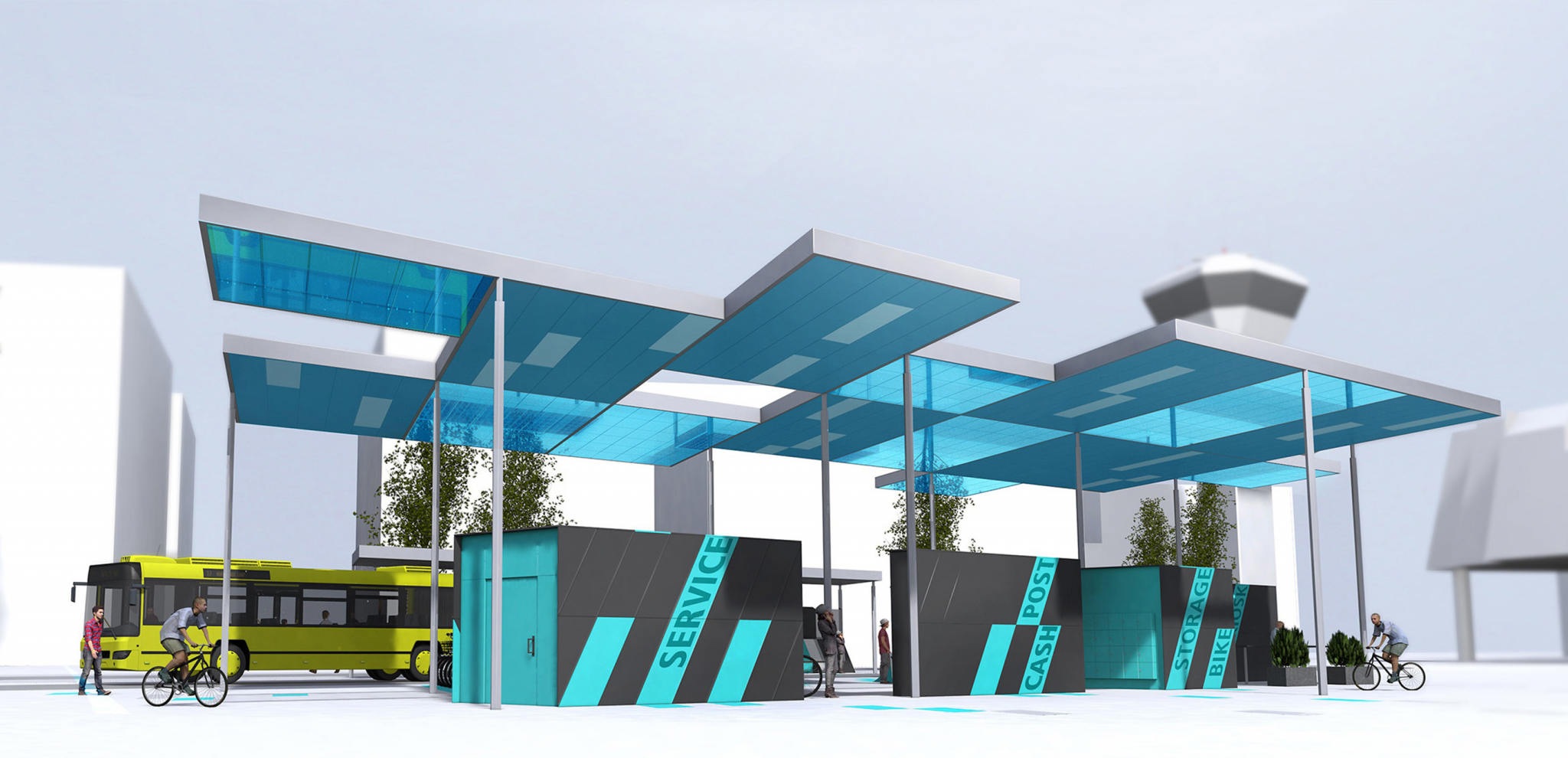
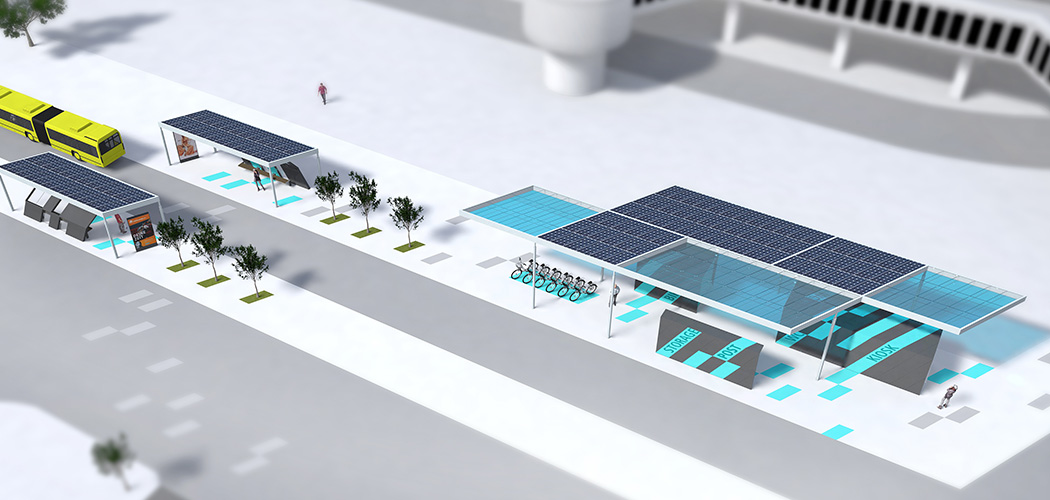
Design concept

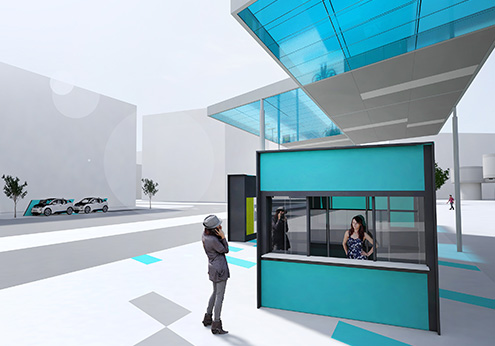
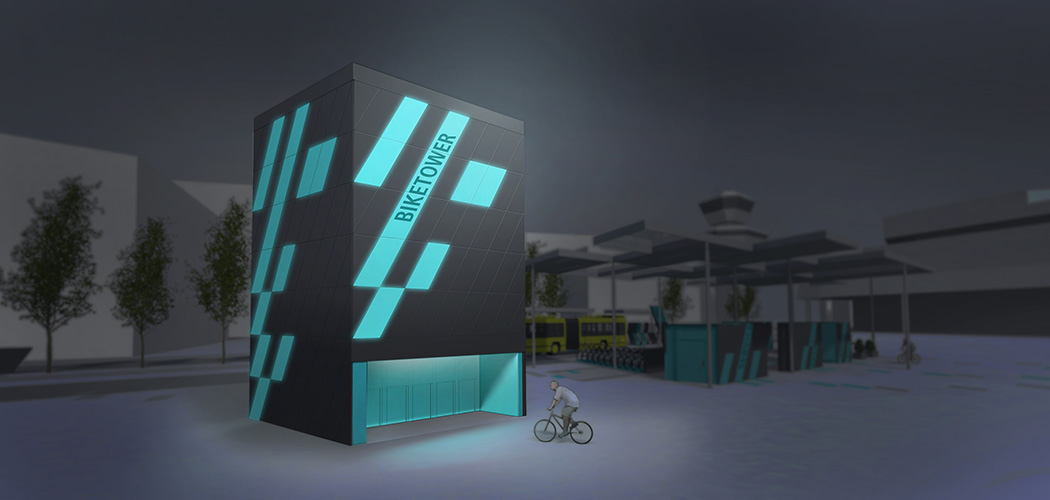
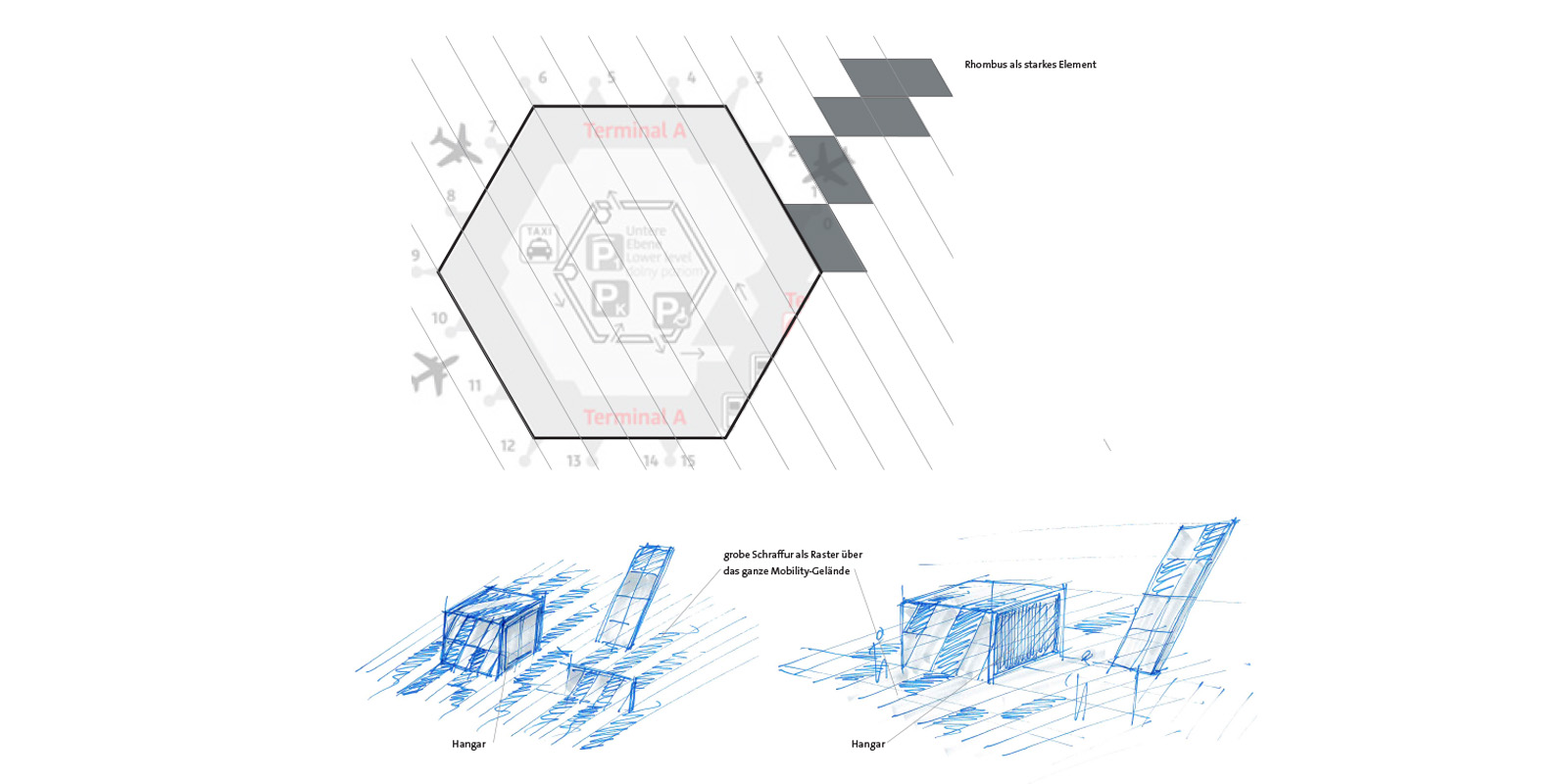
The design concept for the Mobility Hubs on the former TXL airport site is based on a respectful approach to the site and its unique history. Typical elements such as red and white checkered buildings and colored markings on the runway are incorporated into the design and reinterpreted. The modules – inspired by the aesthetics of hangars – are flexible in use and, depending on their configuration, can serve various functions such as toilets, kiosks, or bicycle lockers.

The hubs are to be designed as lively, accessible, and adaptable places. The use of innovative, sustainable materials and modern digital technology creates a contemporary and user-oriented experience.

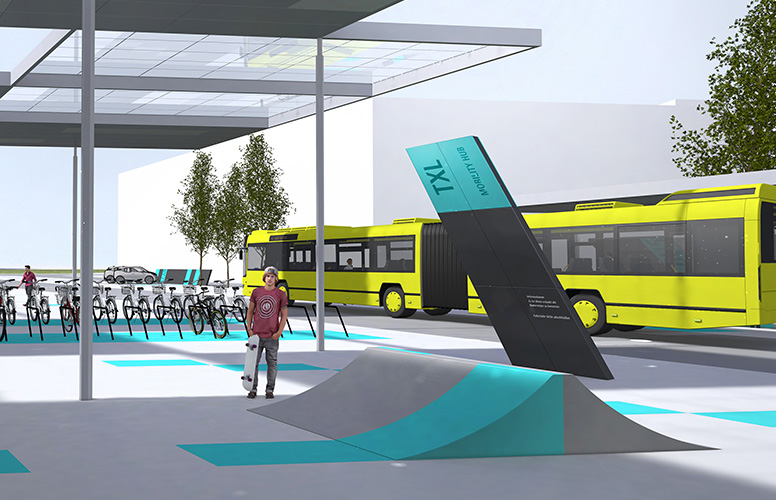
The central design element is the dynamic rhombus shape, inspired by the floor plan of the airport terminal and aircraft wings. It combines floor, wall, and roof elements into a consistent, scalable system and creates recognizability even with spatially separated modules. A striking, hatched guidance system – based on the rhombus shape – guides users visually and physically through the stations and creates a spatial connection even with decentralized modules.

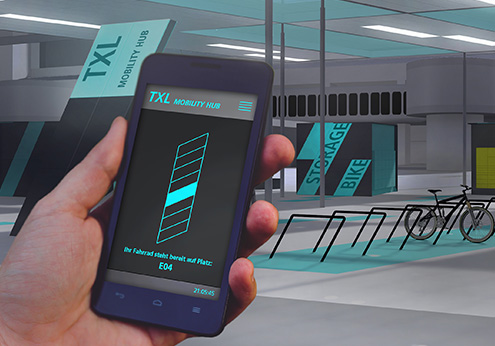
Functionality is paramount: the modular “hangars” enable a wide variety of uses without complex special solutions. Digital interfaces on the floor, wall, or roof communicate with users and display information such as charging status or available services. Overall, the concept combines design identity, functional flexibility, digital interaction, and environmental responsibility – and uses the opportunity to create a forward-looking mobility product on the TXL site.

Data

Client:Tegel Projekt GmbH
Period:Design concept / tender 2017