Infrastructure elements for the Hamburg Metropolitan Region’s cycle superhighway network

Why cycle superhighways

Motorized individual transport causes high CO2 emissions, accelerates climate change and is becoming an increasing problem in cities. The subject of the mobility transition is therefore on everyone’s lips. The Hamburg metropolitan region has set itself the goal of significantly increasing the share of bicycle traffic in overall traffic. This is to be achieved, among other things, by expanding the cycle path infrastructure and improving connections to public transport..

Cycle superhighways increase safety, offer comfort, and enable rapid travel. A well-developed and attractive cycling infrastructure that is connected to public transport encourages people to cycle more in their everyday lives. This is good for their health, reduces congestion, and contributes to the fight against climate change.

Cycle superhighways are designed for people who use bicycles as a means of transport in their everyday lives, for example, on the way to work, school, shopping, or leisure activities. They are accessible at any time of year and day and facilitate the combination of cycling and public transport (intermodal route chains).
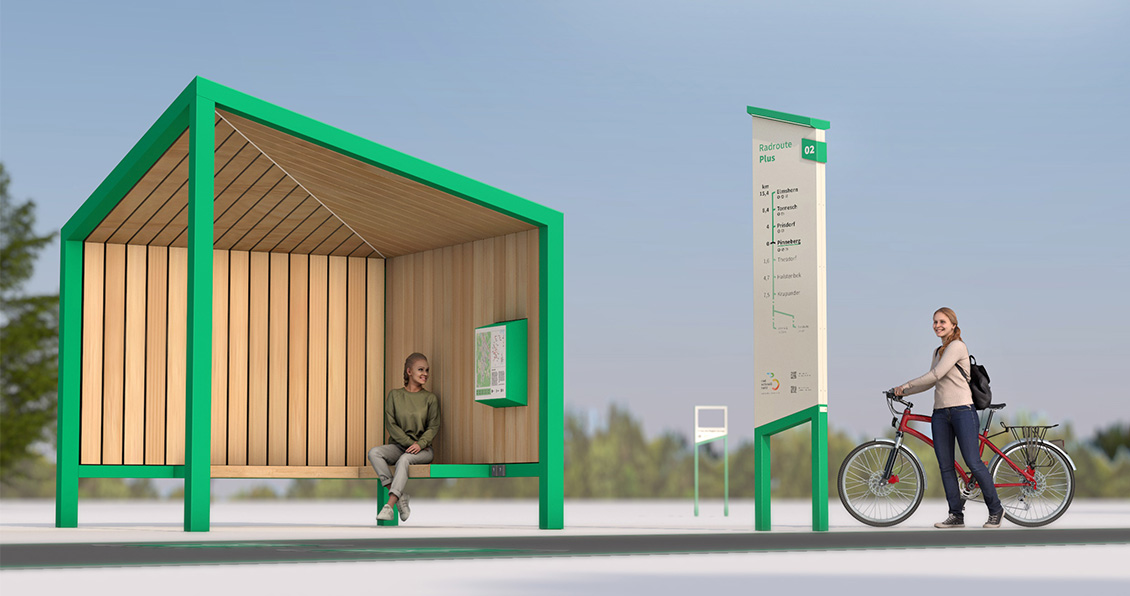
Information stele and identity-forming infrastructure elements

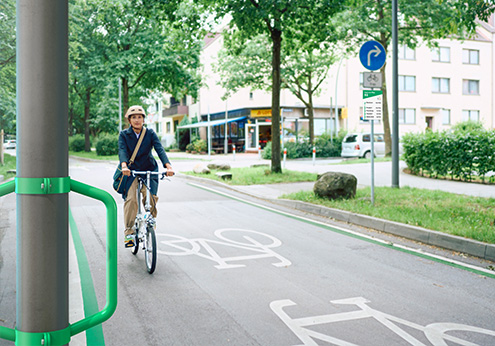
To make everyday cycling more attractive, comfortable, well-equipped routes are needed. Infrastructure elements such as handhold elements, shelters, bike service stations, signs, and information steles contribute significantly to acceptance and willingness to use.

A consistent and well-designed infrastructure not only increases the quality of stay in public spaces, but also ensures high recognition value. This way, the cycle superhighway network is perceived as a coherent system, making it easier to find your way around and encouraging people to use it.

Identity-building elements strengthen people’s emotional attachment to “their” route. Those who identify with the cycle superhighway network treat it with care, report positively about it, and motivate others to switch to cycling. Functional added value and high-quality design contribute to the cycle superhighway network being experienced as positive and helpful.
Design

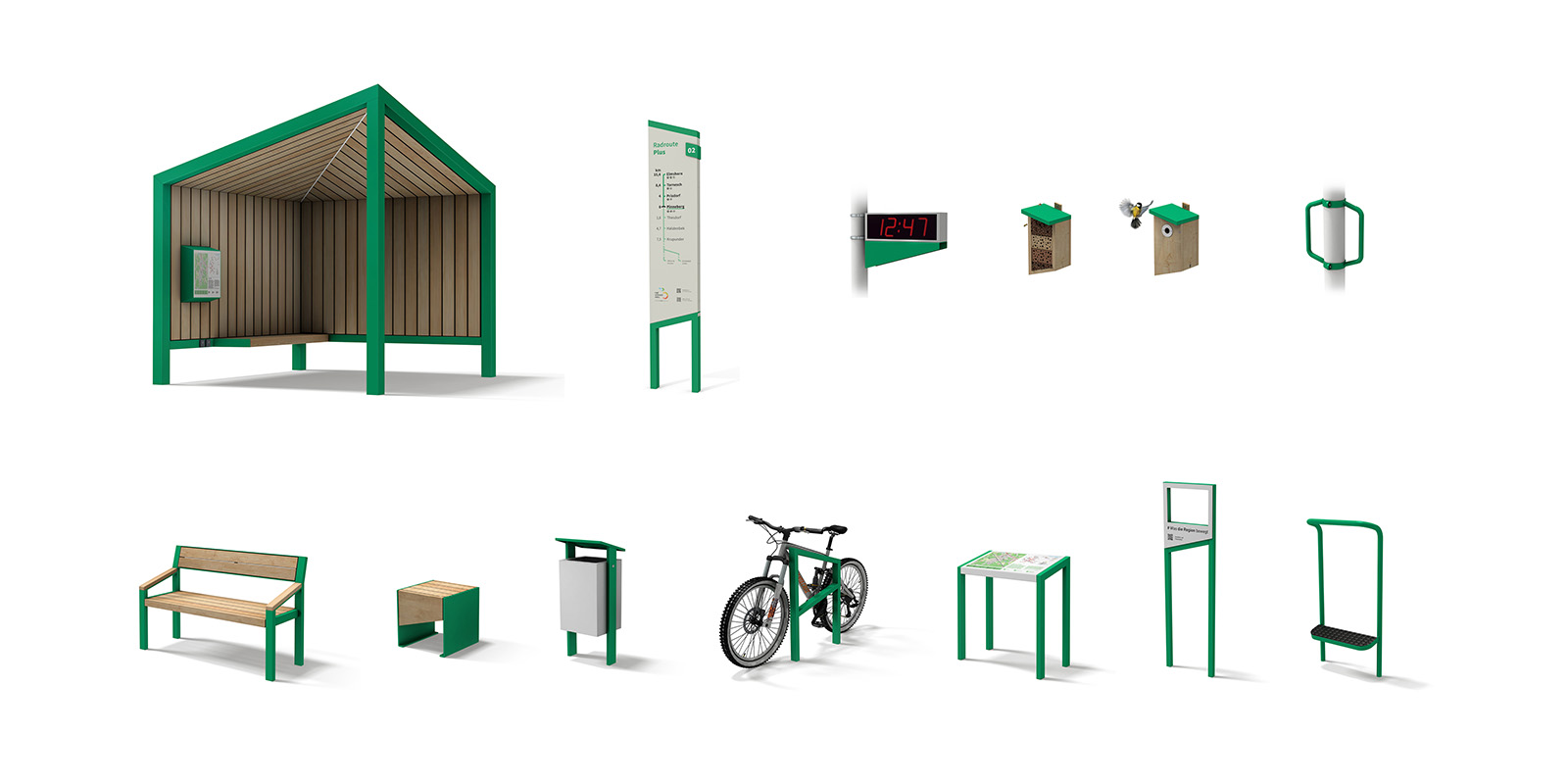
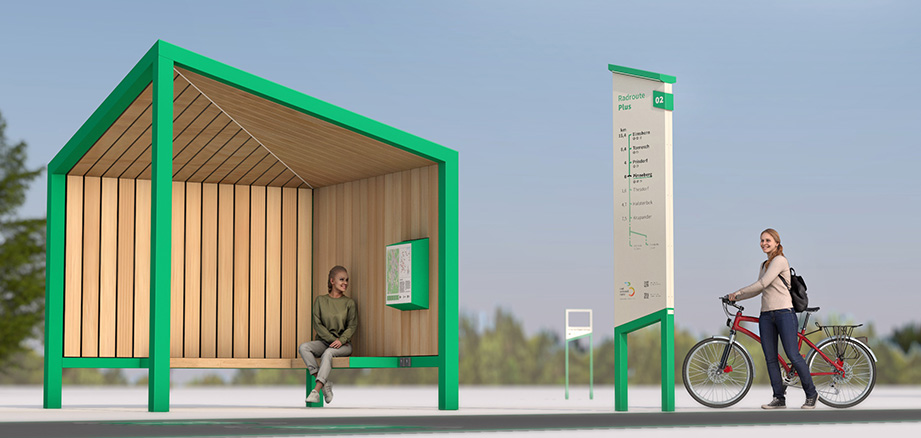
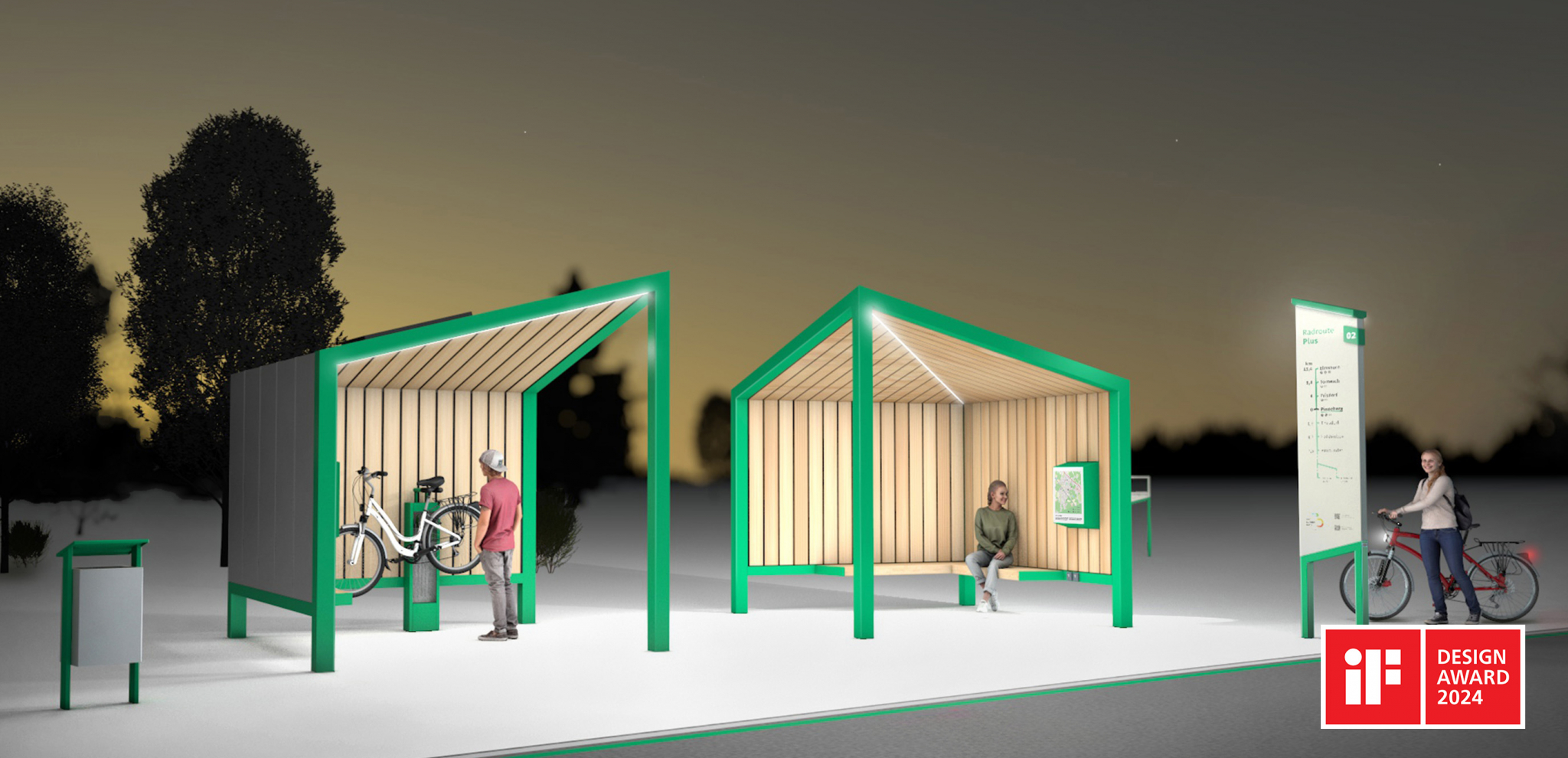
In order to create a high degree of consistency, the infrastructure elements were to be given a memorable design language. A characteristic 15-degree angle was chosen as a simple but striking stylistic element that can be applied to all elements using a grid. This created a style-defining and identification-building foundation for the DNA of the elements and graphics.

Project progression

At the start of the project, a hybrid kick-off workshop was held with the sub-working group under our leadership. The aim was to involve stakeholders at an early stage, gain a better understanding of the mobility needs of the Hamburg metropolitan region, and obtain initial feedback. Monthly meetings were then held to present, discuss, and further develop the state of progress.

Several concept variants were designed and agreed upon with the entire project group during milestone presentations. This gradually resulted in a coherent design for the stele, the stele graphics, and other identification-building infrastructure elements.

Since the cycle superhighways pass through regions with different characteristics, a modular catalog was developed. This enables municipalities to select suitable elements that are tailored to their local conditions. In addition, technical drawings were created which serve as the basis for the tendering of the elements.

Module catalog

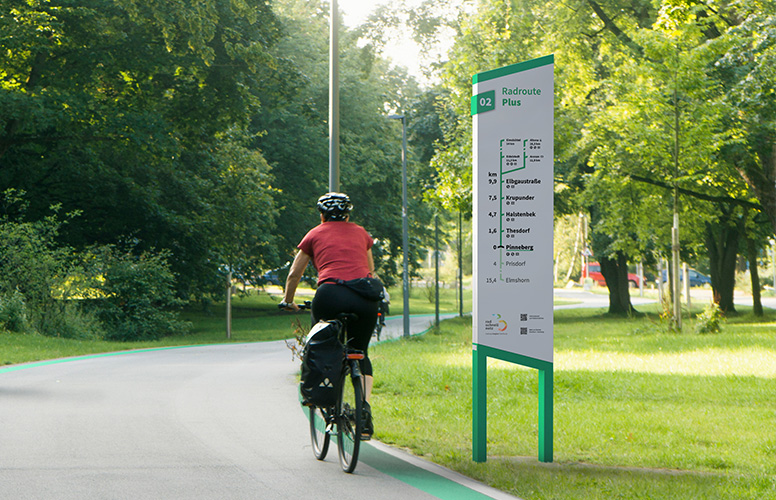
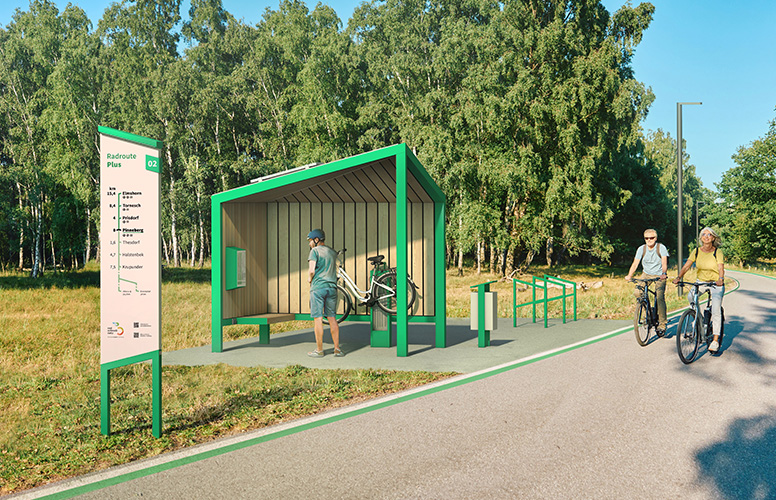
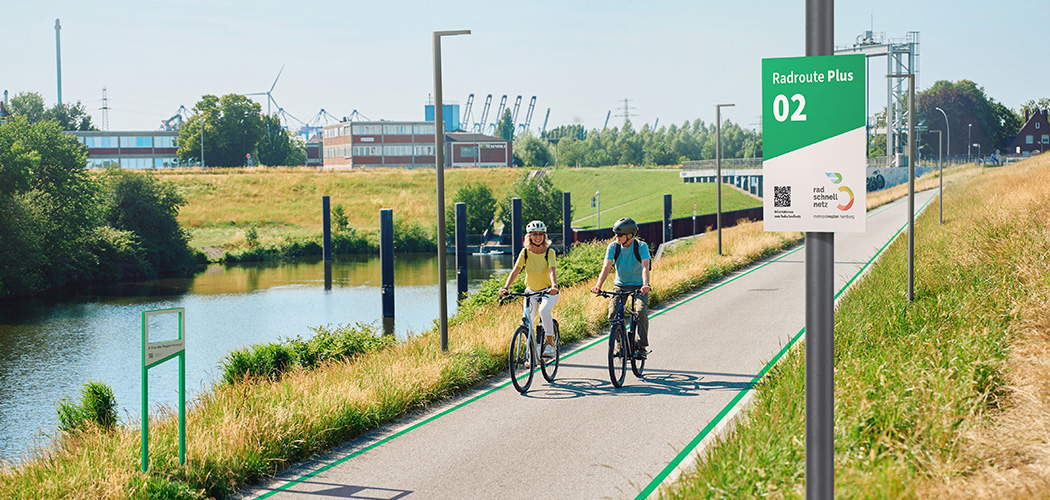
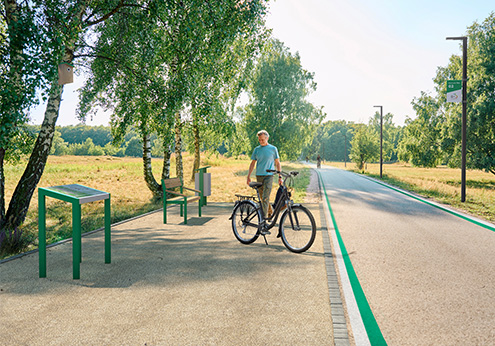
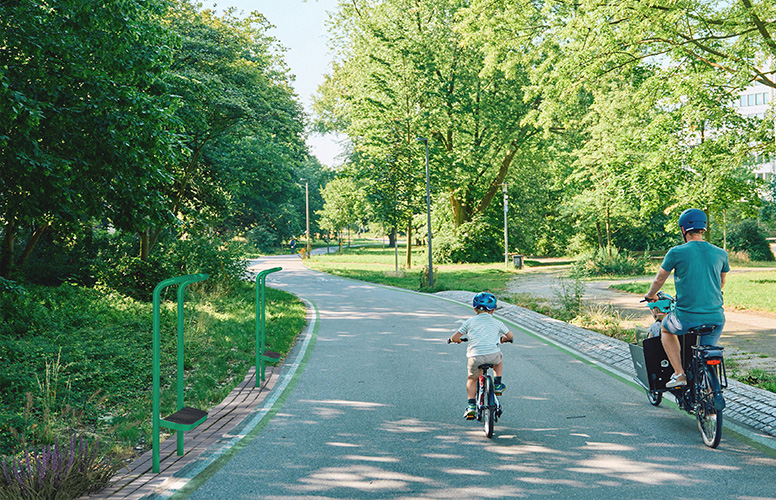
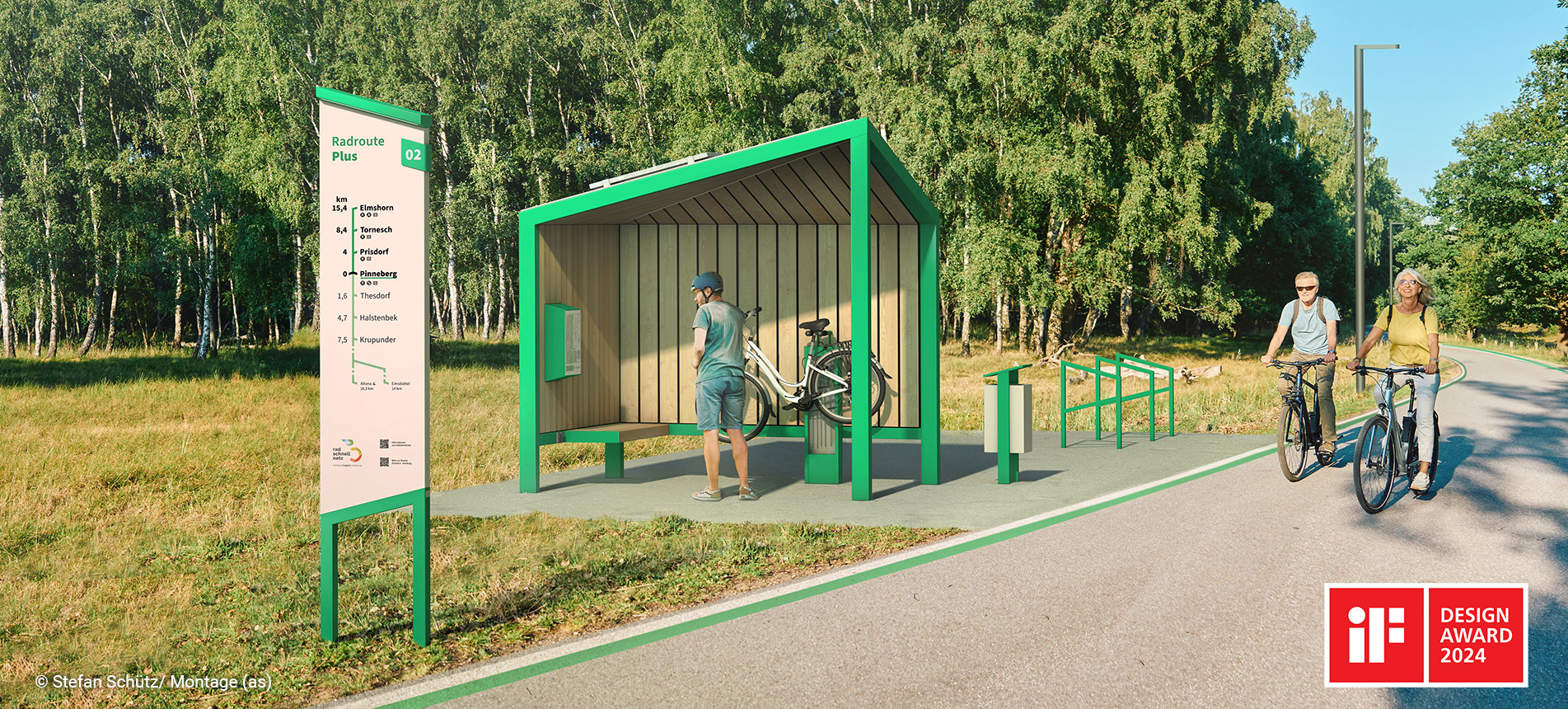
The module catalog for Radrouten Plus (cycle superhighways) in the Hamburg metropolitan region contains a range of consistently designed infrastructure elements designed to improve orientation, information, and quality of stay for cyclists. The central element is the stele, which is placed at important points such as starting and finishing points or intersections. It shows the route, distances, infrastructure icons and QR codes – each adapted to the direction of travel. It is supplemented by various signs, information boards, shelters with charging points, seating, trash baskets, handholds at traffic lights, and picture frames. The consistent design with its characteristic green color scheme and 15° angle ensures high recognition value. Optional modules such as drinking fountains, repair stations, or wind indicators, as well as nature-related elements such as nesting boxes, complete the concept.

Project visualization

The following images give an impression of what the Radrouten Plus cycle routes might look like with the infrastructure elements that have been developed. They do not represent planned construction phases.

© Kalle Schmitz/ Photomontage (as)

© Stefan Schütz/ Photomontage (as)

© Stefan Schütz/ Photomontage (as)

© Stefan Schütz/ Photomontage (as)

© Stefan Schütz/ Photomontage (as)

© Stefan Schütz/ Photomontage (as)

Data

Client:Metropolregion Hamburg
Kreis Pinneberg
Period:Design development 2022 – 2023
Awards:Tender, 1st place
iF Design Award 2024